
Roofing Sheet Lifespan: 0.45mm vs 0.55mm Aluminium Sheets in Nigeria — Which Lasts Longer?
3 Apr 2026 • 10 min read
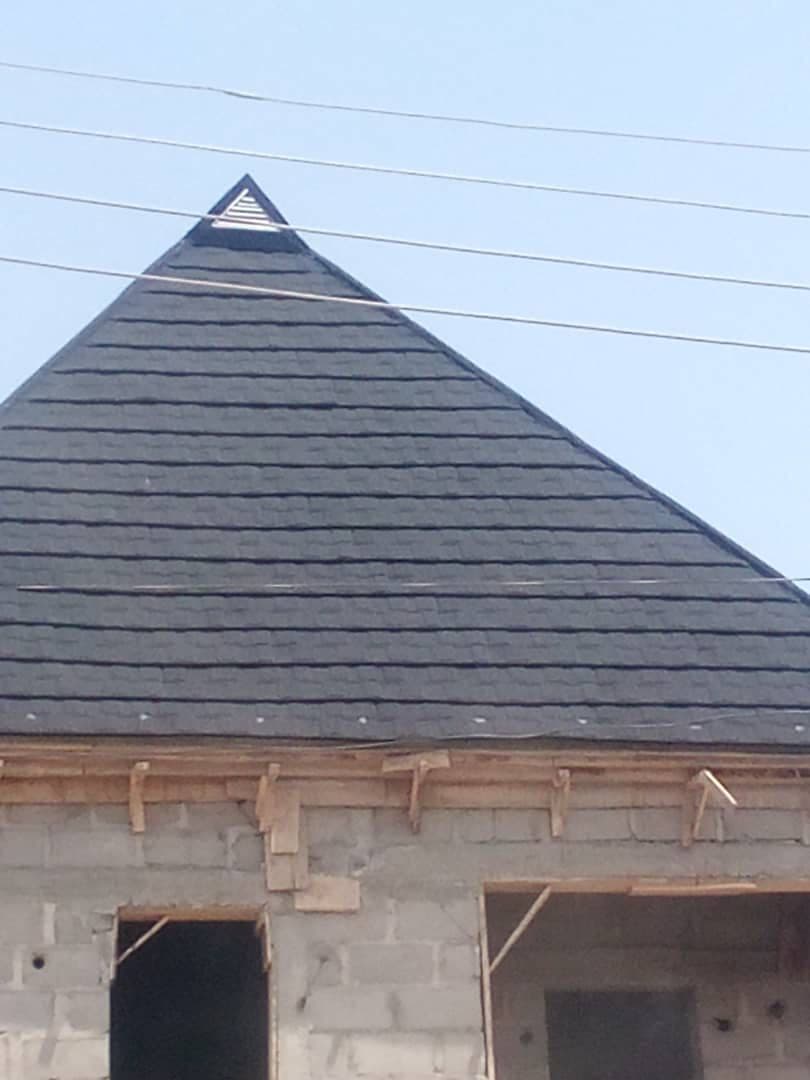
When you are buying roofing sheets in Nigeria, the question of gauge — sheet thickness — comes up quickly. The two most common residential options are 0.45mm and 0.55mm (measured in millimetres of aluminium thickness, excluding coating). The difference sounds minor. The real-world performance difference is not.
This guide analyses both gauges across the most relevant criteria for Nigerian building conditions: lifespan, wind resistance, corrosion and coastal performance, noise, heat, and true cost-per-year.
Understanding Gauge: What 0.45mm and 0.55mm Actually Mean
Gauge refers to the thickness of the aluminium alloy core of the sheet, before the colour coating or Aluzinc layer is applied. Both 0.45mm and 0.55mm sheets typically carry a 55% aluminium-zinc (Aluzinc/Zincalume) metallic coating plus a colour topcoat. The difference is entirely in the base metal:
| Specification | 0.45mm Sheet | 0.55mm Sheet |
|---|---|---|
| Base metal thickness | 0.45mm | 0.55mm |
| Coating | Aluzinc + colour coat | Aluzinc + colour coat |
| Full sheet thickness (approx.) | 0.50–0.52mm | 0.60–0.63mm |
| Weight per m² (long span) | ~3.6 kg | ~4.4 kg |
| Tensile strength relative | Baseline | ~22% higher |
Thicker aluminium has higher tensile and yield strength — it resists bending, denting, and puncture better under mechanical load (foot traffic, fallen branches, wind debris) and is more resistant to fatigue cracking over decades of thermal expansion and contraction.
Expected Lifespan in Nigerian Conditions
Lifespan depends heavily on local environment, installation quality, and coating integrity. Here are realistic estimates for properly installed sheets with intact Aluzinc coating:
| Environment | 0.45mm Lifespan | 0.55mm Lifespan |
|---|---|---|
| Inland / low humidity (Abuja, Jos) | 20–30 years | 30–45 years |
| Lagos inland / Ogun / Ibadan | 18–25 years | 25–38 years |
| Coastal Lagos (VI, Lekki, Ajah) | 12–18 years | 20–30 years |
| Direct coastal / Niger Delta | 8–15 years | 15–25 years |
| High rainfall / roof valley zones | 15–22 years | 22–35 years |
The coastal penalty is significant. Salt-laden humid air accelerates the breakdown of the Aluzinc coating at cut edges, screws, and any areas of mechanical damage. A thicker substrate provides more material between the coating surface and structural failure — which is why the lifespan gap between 0.45mm and 0.55mm widens in coastal conditions.
Wind Uplift Resistance
Nigeria's regulatory standard for wind load (NCP 5 / BS 6399) specifies higher design wind speeds for coastal zones and exposed upland areas. Thicker sheets have a higher resistance to the flexing and fatigue that leads to fastener failure (where the sheet tears at the screw hole during sustained wind events):
| Gauge | Relative wind uplift resistance | Recommended for |
|---|---|---|
| 0.40mm | Baseline | Low-wind inland sheltered sites only |
| 0.45mm | ~15% above 0.40mm | Standard inland residential |
| 0.55mm | ~40% above 0.40mm | Coastal, high-rise, commercial, exposed sites |
| 0.60mm+ | ~55% above 0.40mm | Industrial, heavy commercial |
For any building in Lagos Island, Lekki, Ajah, Victoria Island, or other coastal neighbourhoods — as well as exposed hilltop sites in Abuja — 0.55mm is the minimum recommended gauge.
Thermal Performance & Noise
The sound of heavy rain hammering on a thin roof is a near-universal Nigerian building complaint. Thicker sheets attenuate sound measurably:
| Property | 0.45mm | 0.55mm |
|---|---|---|
| Rain noise (subjective) | Loud | Noticeably quieter |
| Thermal mass (heat retention) | Low | Slightly higher |
| Heat radiation to interior | High without insulation | Marginally lower |
The improvement in rain noise is meaningful in practice — 0.55mm sheets produce a subjectively lower sound level under heavy rain. However, for significant heat reduction inside the building, neither gauge alone is sufficient; a reflective insulation board or sarking layer remains necessary regardless of gauge.
Cost-Per-Year Analysis: The True Cost Comparison
The upfront price difference between 0.45mm and 0.55mm is 15–25%. But the relevant comparison for a long-lived purchase is cost per year of service:
| Gauge | Material cost (240 m²) | Estimated lifespan (Lagos inland) | Cost per year of service |
|---|---|---|---|
| 0.45mm long span | ₦960,000 – ₦1,104,000 | 18–25 years | ₦38,400 – ₦61,333 / year |
| 0.55mm long span | ₦1,392,000 – ₦1,560,000 | 25–38 years | ₦36,632 – ₦62,400 / year |
The cost-per-year figures overlap significantly at the midpoint estimate — and when you factor in the cost of a full roof replacement (materials + labour + disruption) in 15–20 years, the 0.55mm option typically delivers meaningfully lower lifetime cost for the same building.
In high-inflation environments like Nigeria's, a roof that lasts an extra 10–15 years avoids replacement at prices that will almost certainly be significantly higher in nominal naira terms. This makes the 0.55mm option even more financially advantageous than the cost-per-year table suggests.
What About 0.50mm?
0.50mm sheets occupy the practical midpoint between the two common options. They are preferred by many architects and developers for 4-bedroom duplexes and estate housing where 0.45mm feels insufficient for the building's value but 0.55mm is above budget. Expect a 10–15% price premium over 0.45mm and a lifespan approximately 15–20% longer in similar conditions. For most Lagos mainland and Ogun State projects, 0.50mm is a solid choice.
How to Verify Gauge Before Purchase
Gauge misrepresentation is a documented problem in the Nigerian roofing market. Sheets sold as "0.55mm" may measure 0.48mm or even 0.45mm — a difference that is invisible to the eye but significant to lifespan and structural performance.
Three ways to verify:
- Request a caliper measurement at the factory. A digital vernier caliper should show the stated thickness at the flat face of the sheet (away from bends and seams). At Gods Promise Aluminium, customers are welcome to verify gauge at our factory before dispatch, and we offer a caliper-verified standard range for projects requiring certified thickness documentation.
- Weigh a standard sheet. A 1m × 3m long span sheet in 0.55mm gauge should weigh approximately 13.2 kg. At 0.45mm, the same sheet should weigh approximately 10.8 kg. Significant deviation from these figures indicates gauge substitution.
- Ask for the coil mill certificate. Legitimate importers can produce the mill test certificate (MTC) for each coil shipment, showing the declared thickness. Request this for large commercial purchases.
Which Gauge Should You Choose?
| Your Situation | Recommended Gauge |
|---|---|
| Tight budget, inland location, single-storey | 0.45mm — adequate but minimum recommended |
| Residential duplex, Lagos mainland or Ogun | 0.50mm — best practical balance |
| Coastal Lagos (Lekki, VI, Ajah, Ibeju) | 0.55mm — minimum for coastal |
| Commercial building, any location | 0.55mm or above |
| Government or certified project | 0.55mm caliper-verified standard |
| Premium residential, long-term hold | 0.55mm aluminium or stone-coated steel |
For projects where lifespan and structural integrity are paramount — and where you want certified, verifiable gauge — our caliper-verified standard range provides documentation of gauge thickness confirmed by physical measurement before dispatch. This is increasingly required for estate developers, government projects, and mortgage-financed builds.
Get a Quote Specifying Your Gauge
At Gods Promise Aluminium, we manufacture long span, step tile, and Metcopo sheets in 0.40mm through 0.60mm gauges. All quotes can specify gauge and are accompanied by caliper measurement on request. View our aluminium roofing sheet range or WhatsApp us on 09150459964 for a same-day factory quote.
See our 2026 price list by gauge · Cost guide: 4-bedroom duplex roofing
Frequently Asked Questions
Need today's aluminium roofing sheet price in Lagos or anywhere in Nigeria? Visit our contact page to call us or request a WhatsApp quote.